CNC machines are transforming the manufacturing and fabrication sectors by enabling for the accurate and economical manufacture of complex parts and components. CNC machines have altered the way we create, design, and construct, from carpentry and metalworking to 3D printing and beyond. In this article, we'll look at CNC machines and their various uses, as well as their promise for the future of manufacturing. Whether you're a professional in the field, a hobbyist, or simply inquisitive about the world of CNC, there's something for you here. Now, let's get started and discover the fascinating world of CNC machines!
How CNC Machining works?
CNC machining begins with the development of a 3D computer model of the object or product to be manufactured. This model is built with computer-aided design (CAD) software and displays the part in detail, including its size, form, and specs.
 |
| 1. Women working on CAD Model |
When the 3D model is finished, the CAD software is used to build a programme that controls the CNC machine's motions. This script, known as the G-code and M-code, offers a collection of instructions that direct the machine how to move, where to cut, and how fast to work.
 |
| 2. CAD/CAM Process |
The G&M-code programming is put into the CNC machine, and the material to be machined is loaded onto the worktable. The machine is then set up, and the cutting tools are loaded into it. After everything is in position, the machine is started, and the cutting tools begin to move, cutting away at the material according to the instructions specified in the G&M-code programming.
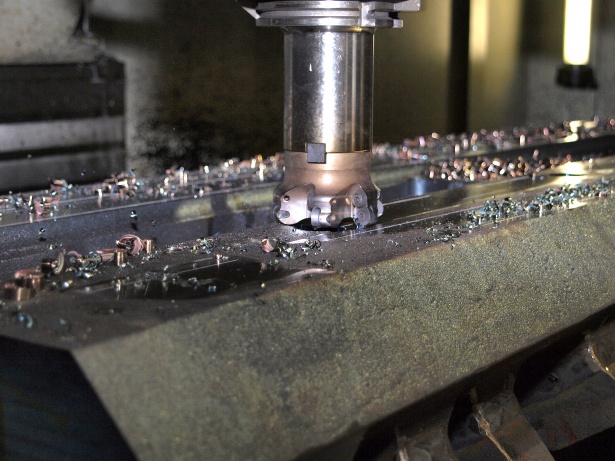 |
| 3. Machining in Progress |
The machine continues to cut away at the material until the part or component is finished. The final product is then taken from the machine and examined to ensure that it fits the appropriate requirements.
Photo Credits:
- <a href="https://www.freepik.com/free-photo/young-remote-woman-architect-working-modern-cad-program-overtime-industrial-female-engineer-studying-prototype-idea-personal-computer-showing-cad-software-device-display_18116160.htm#query=cad%20models&position=3&from_view=search&track=ais">Image by DCStudio</a> on Freepik
- Tebis Technische Informationssysteme AGCNCFräser at de.wikipedia, CC BY-SA 3.0 DE <https://creativecommons.org/licenses/by-sa/3.0/de/deed.en>, via Wikimedia Commons
- https://www.publicdomainpictures.net/pictures/150000/nahled/zerspanen-von-metall-1453645540oUd.jpg


